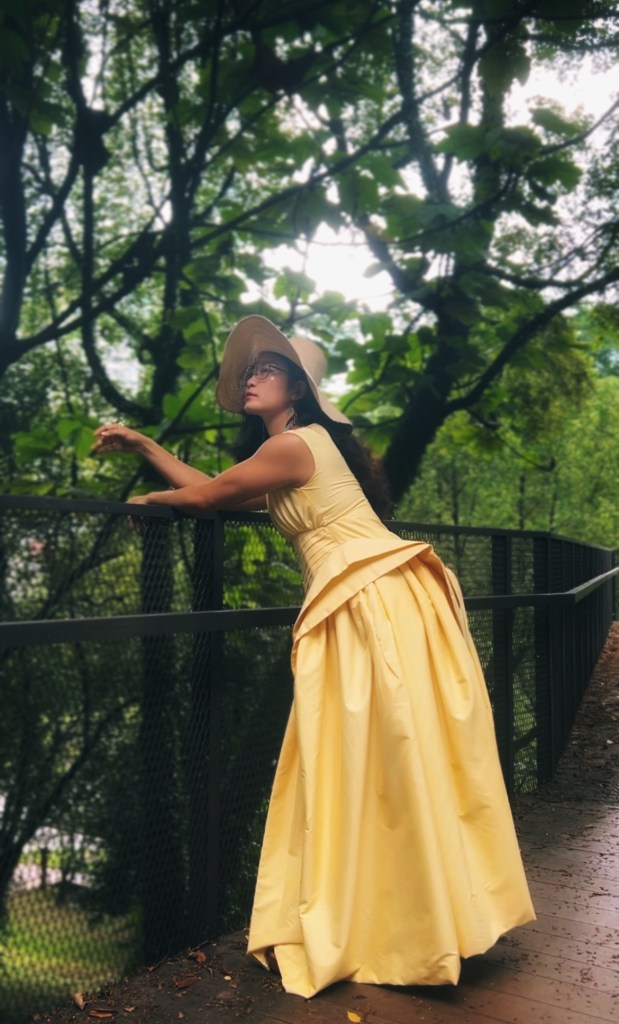
This year’s 25th birthday reflections are significantly different from past year’s. It is a lot more sombre and tinged with some pessimism about the uncertain trajectory of my own future. Last year I was armed with the obligatory optimism of someone on the day of my graduation from college, so stepping into adulthood felt bittersweet with the lingering memories of my freedom as a student. The year before that, I was flying back to Singapore on a red eye flight and had reached some supposed pearls of wisdom about my family relationships. This year, I have finally confronted the uncomfortable truth that perhaps my self-reflections were not enough to change me for the better and had instead sought out therapy for the first time in my life.
It feels like moving backwards after the few years of forging my sense of self, only to find how quickly I have failed before the first few meaningful tests of adulthood. Maybe all my peers are finding themselves in similarly uncomfortable situations and what I need is few nights of us sitting around swirling our wine and sharing these same doubts, finding reassurance that we are all in it together. However, a feature of adulthood is the sense of profound loneliness that makes it difficult to reach out and really connect. It’s a little strange to think that just a year ago, these wine nights were very much a reality, but nowadays (and I’m pretty sure this is just all in my head) it feels like my communities have slipped away and I don’t really have people to celebrate with. How did my sense of self change so much over the year?
I have stepped surely into my quarter life, and I don’t really want to call it the cliché of a crisis, because it really is not – there have been far worse years than this. Being 25 feels monumental though. It has forced me to look at where I derive my ego and self-worth, and I’d like to honour this and not simply gloss through this reflection with goal setting and willy-nilly reflections. It’s been a while since I had space to unpack and lay my internal world bare, so it is a little foreign even to me. Wielding honest words no longer comes naturally, and I keep editing and re-editing myself to really capture how being 25 feels simultaneously eventful and disappointingly alone. Maybe words can’t really do it justice, so instead I’ll share a little vignette that hopefully communicates better.
When I was 18, I remember sitting across from my friends in the canteen during school recess, forearms sticky with sweat and melting onto the beige plastic benches I’m resting them on, and asking a question that was badly disguised to make the conversation about me – “Can you imagine yourself surviving solitary confinement?”. I asked because I wanted to jump in with a reassured sense of superiority when I say, “But I can!” And I genuinely meant it too, and it was something I was proud of. I found it honourable that I had no serious attachments to social relations, and that I could thrive without the piddling human desire for connection. I was sure that I had a knack for being alone without being lonely. I only needed myself. That was my version of being an angsty teenager.
Now though, I do hesitate, and balk at the idea that I only need myself. Being self-reliant was no longer something I perform with pride. I realise that the affinity with loneliness was something that needed serious unpacking, and I don’t want to worship that as a quality in myself. I don’t fantasise about being alone in a white featureless cell as the pinnacle of my strengths. But being 25 is also very much coming to this realisation while noticing the bare walls and the quiet air in the metaphorical room closest to my heart. I perform self-reliance out of necessity now. So let me start here and work my way outwards to peel back what this year’s birthday reflections mean to me.
One: I begrudgingly admit it – Freud is on to something
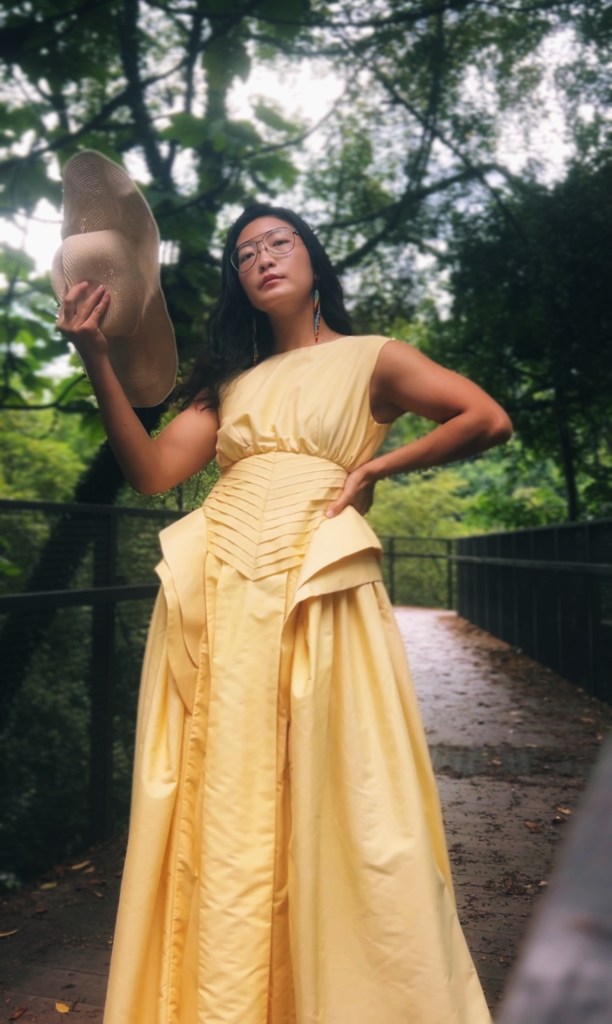
I remember when I was in secondary school, I made the decision that I would expand my reading habits and try being deliberate about consuming non-fiction. The first book I ever picked up as part of this project was about Freudian psychology. Don’t ask me how I got to that book in my school’s two storey tall library, it might have even been my own way of pulling a tarot card. Now, I know that the modern practice strongly rejects many of Freud’s claims, and I don’t believe we are all just walking disasters of mummy and daddy issues. However, I must begrudgingly give Freud credit where credit is due – I have noticed how my own familial relations have subconsciously developed my habit for building self-made confinement cells.
I tell some friends that being in our 20s is just a long journey of unpacking the baggage left by our parents to become our own person, and each year I better understand – really understand – what I had thoughtlessly and intuitively said just because it sounded witty and true. My own loyal dog of loneliness comes very much from my parents. On one hand, there’s my mother, of whom I have written many poems about to process our relationship, with whom I have built up many arguments left unsaid in my head because bottling up our emotions is a virtue in her household. I have even worked up the will to go to therapy to address this. Superficially we are very similar, but at our cores we are very different. I believe in words because they communicate my yearning to be understood. She believes firmly that actions speak louder than words, and that words are most powerful for their subtext. Fundamentally, I believe in people and the importance of connection. Her mantra (and if she would distil one thing for me to take away about people) has always been that a good relationship requires keeping people at arm’s length.
That distance made me crave emotional intimacy desperately. There is no one I am more of a people pleaser towards than my mother, and in spite of my best efforts, I can only grieve how much I’ve fallen short of what would please her. I think I’ve gotten used to the resistance of that arm’s length holding me away, and I’ve come to expect that same gaping distance in all of my interactions. Maybe unlearning my inheritance from my mother isn’t that easy, and I’ve unconsciously walked through life like it’s bubble soccer, and I have built up a strange vacuum of loneliness around myself. The Asian mother’s way of demonstrating love is always the silence and the accompanying plate of fruits or bowl of homecooked meal. I can’t criticise that because I do recognise it as love, but it also does resemble the daily meals being slid under silent walls and doors, into my own quiet cell.
On the other hand, I have also never really examined my estranged relationship with my father. I don’t really know the man, and we’ve not had a meaningful conversation in years. I think about him when I envy another person who sounds like they have a good role model of the certainty of marriage. That’s not really fair to him, because I have never spent enough time with him for him to redeem himself from my memories of him at his worst. I can admit that my parent’s divorce affected me – I do believe in lasting romantic relationships, but only in theory.
However, the greater impact my non-relationship with my father has on my current state of profound loneliness is the awkwardness I have developed around people who have suffered the same circumstances, which impedes the natural sense of common suffering breeding common brotherhood. My brother and I struggle with our sibling dynamics really early on because it felt like we were being pit against each other in a battle for his limited indifference. Now, too, we both struggle to be proud of each other for the person we’ve turned out to be. We both stumble into siblinghood between adults without a script or a well-rehearsed foundation and rush our way through janky and stilted dialogue that takes our arguments somewhere worse than where we started, as though we’re desperately trying (and failing) to do improv. It also seems unfair that my indifference with my father affects me relationship with my stepsiblings. When they recently got their own smart phones, the first few people they thought to call and text to brandish their new toy was me, and I wonder how often I must be on their minds. I imagine they must be disappointed when the best response I had was awkwardly brushing their excitement off. I had hated being a pawn in the proxy war between adults, and I just know that I am accidentally subjecting them to this through my non-relationship with my father.
Commiserating about common troubles feel like a natural way to build connection. Yet I struggle to connect with the few people who share meaningfully similar circumstances as me. I suspect I got protective over the sense of being unique in my suffering because so much of my self-worth from was derived from my ability to overcome the suffering on my own. One of my friends have said before that my biggest red flag is my hyper-independence. Habits are hard to break, even if they are unhelpful, such as being independent in my own struggles.
On some days, I feel like I’ve finally stepped out of the shadows of inheritance from my parents, but on many other days, I find myself equipped with fresh insight like wisdom teeth growing in. The recognition and awareness of maturity always hurt a little and remains a sore point, and it takes monumental effort to rearrange a crowded space to accommodate new understandings about myself. I don’t really blame my upbringing since there is equality in the randomness of the circumstances we are born into. However, reckoning with the Freudian cause-and-effect is important to me this year, because for the first time in a long time, I am living with my family again, and without the time zones and convenience of studying abroad to insulate me from our problems, it has exacerbated my sense of isolation.
I have always imagined familial relationships to be much more supportive than it currently is, and I feel a little like the rug was pulled from beneath me when this myth was busted. Many of my friends seem to find themselves similarly trying to navigate being home again, and I rationally recognise that maybe we’re all in the same boat here. The next step is to stop festering in my self-imposed solitude, and to learn from common experiences. But hey, if I can make one wish this year: I heard that family relationships will mend themselves in time, so hey if that’s in my books, please just let that chapter come soon!
Two: I no longer pride myself on surviving solitary confinement
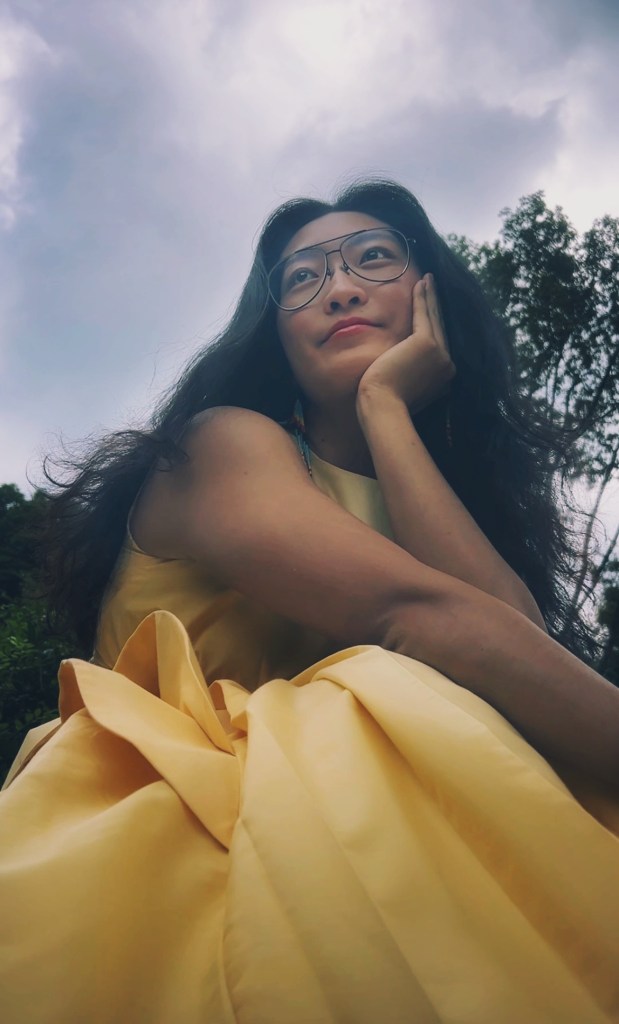
I no longer desire isolation, nor do I find it cool to pretend that I don’t crave human connection. I’m proud of this change, because the warped sense of isolation I harboured before most certainly came from my upbringing, and I’m glad to have changed the trajectory of that. However, the root cause of this year’s emotional trials has been the mismatch in my growing desire for connection and the very convincing illusion that I have grown utterly alone. I know it’s an illusion of isolation. We feel alone despite knowing that we are like the many others who flock to (1) running (2) climbing (3) hyrox (4) pickleball or some other Gen Z hobby to cope with our quarter-life crisis. Yet the last time I remember having honest soul-crushing conversations was in college, and I do crave that feeling of being recognised at my most vulnerable. Or perhaps this is just my withdrawal symptoms from leaving the very special environment of college.
My self-worth now has a distinctly human dimension. Have I gotten better at understanding others around me? Have I forged a community? Have I been a good friend? Arguably no. I can’t help feeling that in the past year I’ve been falling short as a friend. I have missed out on meetups because of work ending late, and I feel like I’m still as bad at checking in with my friends as I have always been. I desperately try to keep in touch with my friends who are now overseas, but I can’t escape the feeling that I’m letting my friendships slowly fade into a background.
Importantly, even till now, I hardly share my hardest emotions with my friends. I always tell people about difficult moments after I’ve resolved it, never in the midst of dealing with the mess when I most needed someone in my corner. In return, I don’t promise people they can lean on me in their darkest moments either. I remember how I used to wear my heart on my sleeves on every card I wrote and promised earnestly that I would always be there to listen to them. I feel like I’ve failed that promise because I myself never rely on others, and it seems unfair to demand that same vulnerability from others. I think I got scared too. I am less able to manage the weight of my own problems with the diminished energy after work, and I’m scared that when I tell people to lean on me, I am the person who fails them by giving way when they needed the support. I worry that eventually people’s forgiveness and goodwill for me being a bad friend would run out.
There is this great line from an anime that I watched about dealing with grief: We must water our loneliness, but not be crushed by it. The show portrayed loneliness as a metaphorical cactus jungle in the desert, and we must keep it alive because it is the only thing alive, and it gives us water, shade, and the occasional sweet fruit. However, it can cage us in and become really painful to break out of if we let it flourish, or if we stay immobilised within it. With my work easing off the pedal, I hope I can make more time and space for my friends. It has gotten to stage where the cactus pricks obscure the path out and there is resistance to break out of it, but I know this is a critical juncture, and I want to hang out with my friends more meaningfully, and I want to start taking action to mean it when I tell them they can lean on me.
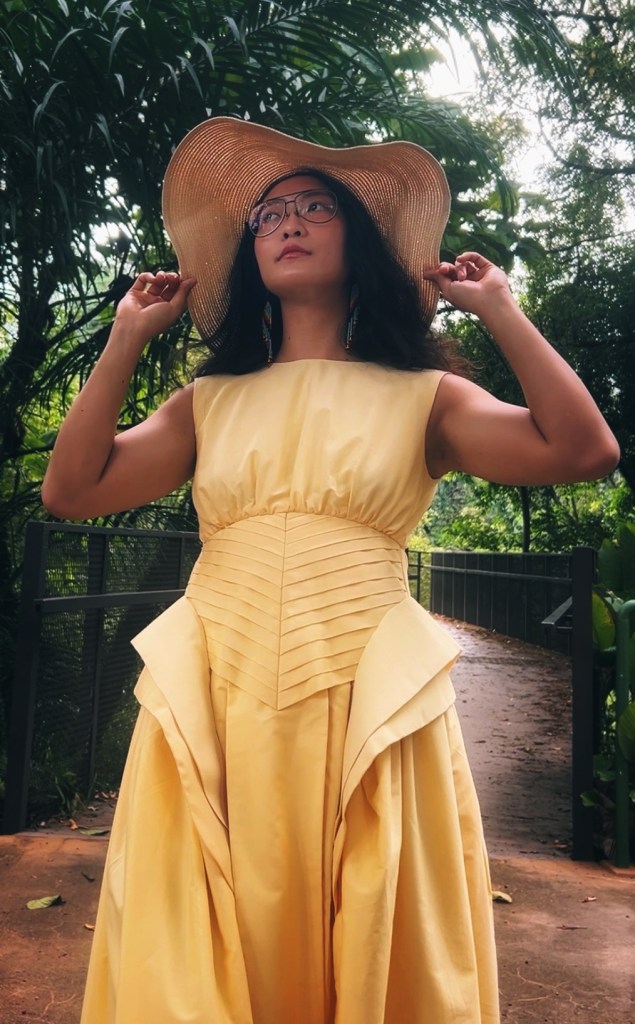
In the absence of free time to do solo-travelling, the one thing that has been watering my metaphorical loneliness and keeping it lush has been my work. Working as a ground commander after coming back has been emotionally taxing. I am easily running into my daily word limit with the ceaseless talking (about actual work) and yapping (about building the connections to make command work). Command is an inherently lonely position. I’ve always known that. But maybe I wasn’t expecting it to be so lonely as a platoon commander, so early on in my career where the rank difference has yet to set in. For all my initial enthusiasm and goals I had set when I first graduated, I think I have failed fundamentally in connecting with the people I lead. It kind of breaks my heart to feel like I’ve poured a lot of thought into the activities I plan and how I carry myself, but these efforts aren’t what my battery needed or appreciated. I feel like I’ve let down all those who believe, and importantly my own expectations, that I can be an inspiring leader.
It is also a brutally thankless job, which really adds to the sense of isolation. There is only so much a human can be asked to unconditionally give without expecting something in return, and all I’m asking for in return is the elusive sense of camaraderie that was sold as a feature of a military career. I chalk some parts of it up to the current unit’s culture, but also recognise that my job scope has expanded beyond that of a platoon commander, and it has isolated me from the people I was supposed to lead and stay relatable with. Camaraderie must also extend to the harder things like giving one another honest feedback, because we are invested in one another’s improvements. Yet, it’s been ages since I feel like I got genuine feedback from either directions, my superiors or my own platoon.
There is also the other unexpected part of things beyond my control, like my age and gender, creating the sense of distance. I’m scared that the gap in maturity and gender is insurmountable. I’m scared that the thing keeping me isolated is something inherent to who I am. This is where I really struggle to keep my work from interfering with my sense of self. Professional achievement matters to me because I have always believed myself to be someone who can do whatever job given to me well. Perhaps not taking things personally is a skill and it will get better after some time, but I’m convinced that for me that will never go away because being a woman in a male-dominated space will always be a feature of my career and my performance will always be tied to something personal. The silver lining thus far, and something I am incredibly grateful for, is that the sisterhood with other servicewomen has been a steady anchor and it is one area of my life where I feel more connection than isolation. The girlies really got each other, and I’m grateful that I have a meaningful and honest friendship where we need to have one another’s back.
If my reflections thus far about who I am both personally and professionally sounds really anxious, it is because I am. I don’t know how to bring this reflection to an uplifting conclusion, or to a point where I can take actionable steps of improvement. Maybe this is the reason why people call this a quarter life crisis; we struggle again with being really bad at what we’re doing as adults – holding down a job, trying to be a person who makes our younger selves proud. There’s no neat goal-setting, and I can only hope that my honest reflections create a landmark that I can return to next year and find comfort in whatever small improvements will be made.
Being 25 is monumental, because I have crossed the threshold where nostalgia is now no longer a good form of escapism. I know for sure that I can no longer reminisce with my friends and yearn to go back to simpler times. The times ahead are going to unfold regardless of whether I am looking at it, and I’d much rather stop looking over my shoulders to watch my footing as I step into the next few years.


 Updates
Leave a comment