What people don’t tell you about scholars is that at some point, we will forget about how proud and overwhelmingly happy we felt when first hearing the confirmation, or how jittery our hands were when we cradled the phone with the email with the big pregnant news.
There are many things that people won’t tell you about scholarships, and at least in my sensing not a lot of scholars talking about what they think either (Fear of scrutiny? Organisational censorship? Who knows.) It hasn’t really struck me that I have received a really prestigious scholarship until something interesting started happening to me: people I don’t know would have known about me from some kind of news or rumour. More unthinkably, juniors have started asking me for advice on scholarships. I will try to be honest and give shape to the stress and expectations that everyone thinks they understand what they’re getting into when they apply for a scholarship. Keep in mind when I say “we” I really mean to say “I” and am just hoping that what I am feeling at least resonates with some other scholarship holders.
What people don’t tell you about scholars is that we lose our privacy. These days wherever I go in the military, people know me as “that SAFOS girl” before I even introduce myself, and it becomes impossible to conceal that fact. I was standing with my hands on my hips waiting for a bus (back when we still had shuttle busses from camp to home) and got judged for the way I stand: “scholar also can stand like that?” In small ways, we can’t live our lives in peace without being guarded.
We lose the privacy of our identity, but more importantly what I am referring to is the privacy of failing. I used to be able to nurse my embarrassment or incompetence by thinking “hey I suck at this because I am a complete beginner”. People don’t judge babies for their complete inability to survive by themselves because they are beginners at life; people don’t judge teenagers for being emotional and cringey and immature because they are beginners at being adults. I feel quite distinctly having people know about my scholarship before knowing me somehow robs me of that privacy to suck really badly at something because I’m not “a noobie 19-year-old” (who has the stupid humour and immaturity of a 19-year-old) but “that SAFOS girl” (who everyone believes will become super high-ranking or some prominent politician).
In BMT, I was more mature than I was in JC, but that doesn’t rid me of my habit to keep to myself and stay more task oriented. I had visions to be able to strike conversation with a new person and we get close and we are all laughing. I rehearsed that vision many times. But it doesn’t happen because when left to talk to someone I shrivel and die inside and it contributes to giving people the impression that “I’m too good for you”.
In OCS service-term, I was more mature than I was in BMT, but till this date I am still haunted by memories of myself raising my voice and losing my shit at my platoon and cringe so hard. I occasionally think about the feedback I got from peer evaluation to the effects of “you could afford to be more friendly”. I wish I was I was a better version of myself so that I could avoid these mistakes, which quite honestly have become a bit of an insecurity for me.
At this point in writing, being a lull cadet in Artillery, I am more mature than I was in OCS, but I feel bad for making careless mistakes during lessons, for not being as friendly and natural with new people, for not programming my Graphing Calculator to solve our math problems (because the previous SAFOS scholar did that). I almost get the impression that people expect me to do something impressive upon first meeting, like stand on my head while juggling or something. Maybe it’s more in my head but more often I feel that I disappoint their expectations.
Another thing I realise that I’ve been taking for granted is the privacy to express our emotions. I am a pretty emotional person and coupled with the fact that I’m not afraid of conflict, that makes for a bad impression of me having no emotional restraint. If I may reference back to having a short fuse during OCS service-term, that was feedbacked to me in a written report about all scholars, sort of like a review for whether we have any problems that makes us undeserving of the scholarship. The right to get angry is a privilege. Increasingly I feel that I can’t afford to throw a tantrum or simply think “screw others I should stick to my own” because it is more damaging to me than the “others” and every misstep I fail to remedy now will come and bite me in the future. Everything is forcing me to grow up faster and I feel like I can see that in my face and it saddens me: what have I done to that smiling kid in my old photos?
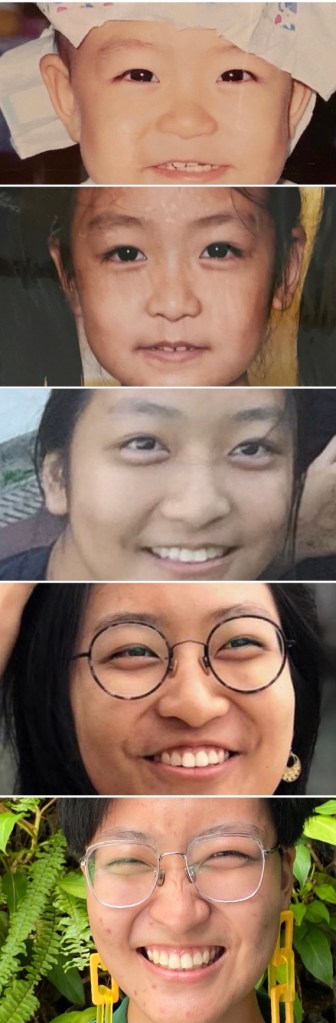
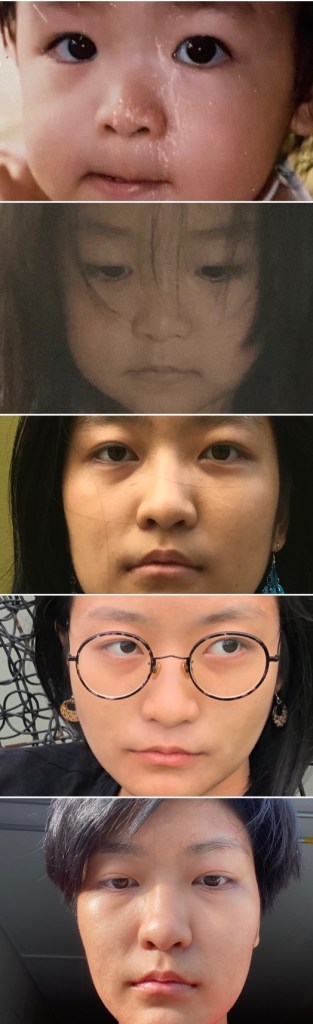
All these are normal things to suck at when I am only 19, but I know that people don’t think it should be the standards for a scholar bound for Great Things Ahead™. It might just come off as privileged whining, but sometimes I wish I had a chance to be forgiven for being a child. I guess this is part of learning to live with criticisms and judgments. Readers up to this point might either think stop complaining these expectations are proportional to the easy life you will get, to which I say fair enough I knew this was to be expected when I signed up for it, and I must pay for the unfair benefits I get with some other form of unfairness towards me, or being a scholar seems no fun and all stress. Of course there is the stress, but despite the overall negative tone of this writing, the experience isn’t defined by the stress and is a lot more insightful than I am letting on now (it’s just for the sake of word count I’m cutting the fluff).
What people also don’t tell you about scholars is that we all suffer from imposter syndrome at some point. Maybe we ourselves never tell people about it partially because I feel like people will respond something to the effects of then just give up the scholarship if you don’t feel worthy of it. Imposter syndrome means feeling like we just “lucked out” and got to where we are not on our merits and we took up another smarter/nicer/better person’s slot.
Many times, especially when we are still trainees and inevitably suck at what we do, everything feels like an attempt to prove to people that we are worthy of the scholarship. I, personally, and some other people I have talked to, feel this additional pressure to keep proving to people because we don’t just represent the standards we hold ourselves to, but also the quality of the organisation’s talent selection processes that has decided to award us with this recognition. Especially nowadays, I feel like I have to be the most hardworking – when people rest I have to go the extra mile and study more content – and be the highest scorer – top all the exams even if test-taking isn’t my forte – and be fitter and more helpful. If we cannot be the best, then that means there’s other people more deserving of the scholarship.
Many times, we tell ourselves surely they must have seen something in me, and believing in the people who chose us is all we have when we can no longer believe in ourselves. That is all I could offer as words of comfort, or cling onto to comfort myself. It meant a lot to me, more than any other words of affirmation, when people tell me that knowing me made them believe in the talent selection processes of the organisation.
The troubling thing is that it is expected for us to prove ourself. If I do go the extra mile, it isn’t because “you’re a hardworking person” or “you’re a helpful person” but that “it’s to be expected of a scholar”. In a way, we have to move away from extrinsic affirmation because nobody will affirm us for doing the bare minimum (even though the effort is far from minimum) of what is expected from us. Expect your efforts to be discounted. But expect every shortcoming to be even more scrutinised. I’ve had someone wag a finger in my face and tell me life will be easy for you since you’re a scholar and I don’t have the right to say anything to defend myself. Everyday something will happen to feed the imposter syndrome, and we have to learn to deal with it without internalising and abusing ourselves with those same accusations.
What people don’t tell you about scholars is also that we get disillusioned after having our elitist bubble popped, and reconciling that image of real life and what we thought is something difficult and might stop people from continuing the career. A lot of the reason why we take up a scholarship is idealistic and I always get shamed for recounting my reasons for signing on (rolls eyes). Personally, I had bucket-loads of standards for myself and I had, quite elitist-ly I admit, thought that everyone should align to my standards because it is high. Especially after talking with senior commanders who are also scholars, I see so much of myself in them: females being extra tough on younger females because we want to uphold the reputation of our gender, demanding good attitude and asking hard questions to “inspire” people, asking tirelessly for feedback and areas of improvement. People don’t react well to these all the time.
Maybe this may manifest in us being disillusioned with the current system and the way our superiors behaved. At some point I felt this deep deep fear in my gut that I might have made a wrong choice. The thought that I will have to inspire and motivate people who I struggle to respect, or work with them, or ultimately live under their command made me scared. What we say in the stressful and lonely chair before the scholarship board is still said in our comfort zone, and it has no bearings on what we are getting ourselves into. On the flipside, it also pointed out just how deeply ingrained my elitist mindset is. It took me some reflecting and catching myself red-handed mid-thought to realise how to overcome that and not be driven into a place where I will regret my decision.
The military is a place I chose for its diversity and how wide a spectrum of people I get to work with. That was the answer I gave the scholarship board. While it’s not a lie, I didn’t think I was mature enough to mean what I said, to grasp what it meant to work with diverse people. It meant disagreeing fundamentally with people, and learning to concede to them even if I might not be convinced. It meant changing all the internal standards I judge people with because everyone is a product of their upbringing that can be completely different from mine. It even meant relearning a new language to communicate with people who punctuate with slangs rather than full stops. I think becoming disillusioned is being unable to reconcile with the flipside of what motivated us to join in the first place and it is perfectly understandable why people leave the force – none of us 19-year-olds are properly equipped to process this difference.
The growing disillusion might also come from starting to doubt our own principles in the face of “reality”. I know I’ve been suffering from this quite severely. The right thing to do is rarely the popular decision. And strangely enough, without the biases against me as a scholar (reference the point on privacy of showing anger, to be more mature) I was more comfortable with doing the right thing. I didn’t have to give a shit about whether people liked me for my decision. Now though, I feel like sticking by my principles is not simply a moral decision, but a social one. Is this worth antagonising everyone else? How should I do it so that I could stick to what I believe in while being nice with disagreeing? No one likes that kid in class who reminds the teacher of homework. I’m starting to think that my mental health is at risk if I am always in an environment where the right decision is always the unpopular one.
In this way, I am grateful to have been brought up in Delta wing in OCS. The initial reaction to the term “premium wing” or “scholar’s wing” was that it was damn elitist and I had a bit of a reaction to it. However, I realise now that the few months I had there gave me the luxury of feeling normal, without being constantly branded “that SAFOS girl”, without having to second-guess my own beliefs and consequently gave me the confidence to choose the “right” thing and that I should stick by it. I guess it also goes to show that the good times and bad times, those that affirms our beliefs and those that disillusions us are in equal proportion and it will come and go.
These fears that plague me are things I wish I could tell people about, and that people would tell me about before I had applied. None of these considerations played a part in my application, but knowing about the unglamorous inner worlds of what taking on a scholarship meant would have given more resolve in my decision, for I would have made the choice without illusions. In the midst of applications, all I could see were high hurdles of interviews after interviews without knowing whether I really wanted to see the view beyond it. This is part of the view beyond, and I’m not sure if it is helpful to anyone who are more concerned with firstly getting the scholarship than the larger purpose. I am even doubtful of this being relatable to everyone.
Writing about what people don’t tell you about scholars makes me feel vulnerable because I am aware that it is even a privilege to be able to write about such a niche group of people. I might even come off as though I am whining and being ungrateful when before me is a silver platter with a lot of things handed to me. Who knows, maybe some people might even think I am asking for sympathy that I don’t deserve. However, what people don’t tell you about scholars is that we are all still immature young adults, very much human, and very much affected by the judgments suddenly flooding into our new environment. After admitting these vulnerabilities, I still think to myself: I don’t have the right to get stressed or overwhelmed, because if I get stressed now, how would I handle greater things in the future? Even now I’m struggling to comprehend just how much stress I am under, but I am grateful that this scholarship gave me the chance to struggle with all these, and to grow henceforth.

 Updates
Leave a comment