
Recently I feel that I am becoming less and less ambitious and worry that it must be a sign of aging. Ambition – in its hot blooded pursuit of better things, higher things, and usually more material achievements – requires boundless energy and therefore must belong to the youth. Eyes on the prize, it’s first or nothing. I remember being like that once, but that feeling is vague now, as though I am grasping at a vase’s outlines and blurred details through dust sheets. So maybe this is me trying to find excuses for myself that I am not actually aging, and that this “mellowing out” of ambition means maturity and growth into a different stage of my life.
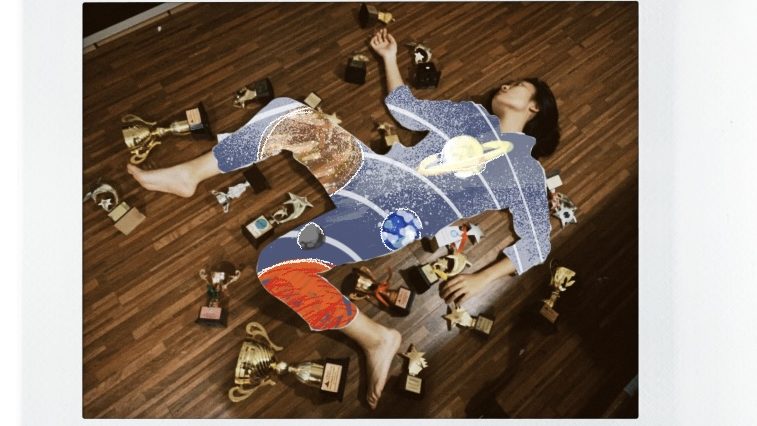
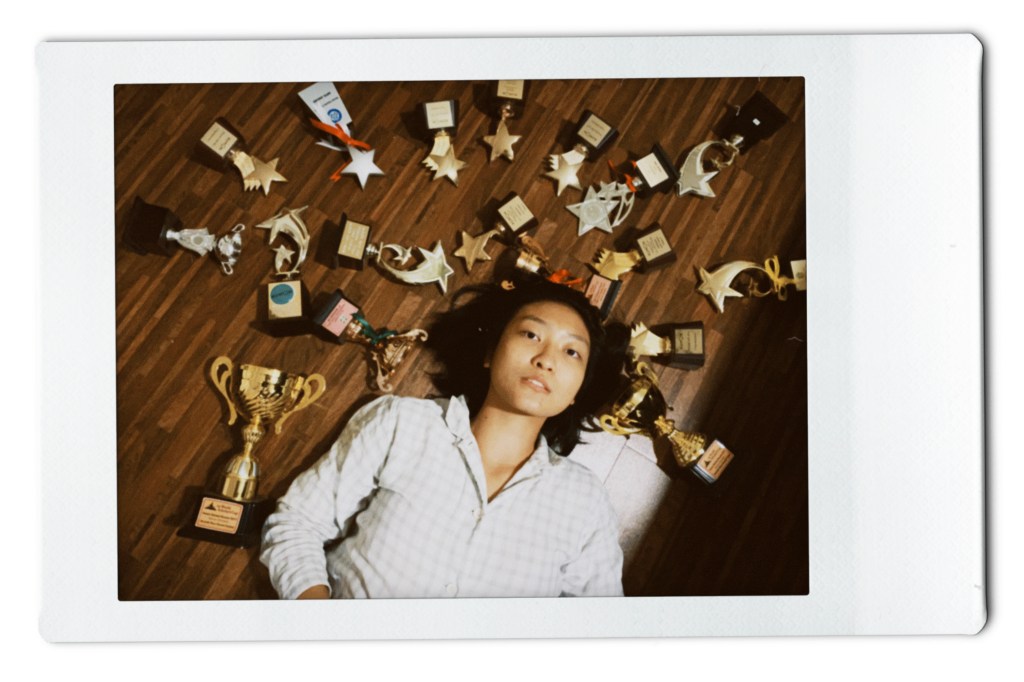
Courtesy of my brother’s countless plastic trophies from his childhood slaving away at Kumon, I have an entire rank of trophies to stare at while they slowly collect dust and inspire me to think deeper about what it means to be ambitious. To me, it seems sad that all these trophies are just sitting there reflecting the dim morning light, like winking stars that remind me of how fleeting that moment of winning them was. Why did we work so hard to win these awards? Surely no one sets out wanting to win because of a mass-produced piece of plastic with our name slapped on it? When I think about why we want to win awards, I arrive at only three reasons. Firstly, it stems from our innate desire to do well (self-motivation) and awards are the tangible way for us to measure and reaffirm our performance. Secondly, it stems from a desire for external validation that winning something connotes, in many ways similar to how we want to score well for exams in exchange for our parents buying us something we want (I used to negotiate for soft toys). Thirdly, it stems from a desire for the genuine emotions at the decisive moment of victory, very much the case in sports with all the victory cries and the roar of the crowd thrumming through your veins. That feeling is addicting.
Each trophy and accolade capture a moment in time where we have achieved something, and it is a testament to our hard work and attitude to acquire it. However, I think it is gradually losing its appeal because in hindsight everything seems easier, and it creates a sense of dissatisfaction – was that really my best back then? When I am not tricked by the rosy lenses of hindsight, and can recognise the abilities of that version of me, the bigger issue arises – I fear that I will cling onto these past achievements and out of complacency forget about getting better in the future. An award reaffirms us in a particular moment in time, but it’s not a good indicator for our potential afterwards. The panel for the Nobel Peace Prize (on speaking about the Rohingya Crisis) said that they are only responsible for giving the award at that moment in time and it is on the recipient to carry on their duties towards peace and live by their moral conduct. It is reliant on the goodwill of individuals to remain deserving of that award. In many cases, people who continuously win awards, or teams that win championships cycle after cycle, manage to do that not because they have achieved that standard of award-winning performance, but because the pressure of defending the title coupled with an addiction to the taste of victory motivates them to train even harder and give something even better.
The other thing with using winning as a measurement of our abilities at a moment in time is that it gets harder the older we get, and it takes some growing up to realise how to be alright with it. We joke about how we peaked when we were children, scoring much better scores in exams (in the last 6 years the times I have gotten a score that starts with 9 can be counted in one hand), winning most of our trophies then, and suffering from burnout once we reach teenagerhood and become seemingly mediocre. It’s not true that we got worse off. It is difficult to recognise that as children, affirmation comes easier because that is the encouraged method of instruction (parents must be nurturing, encouraging, reward them for their improvements) and it is generally considered taboo to crush a child’s incentive to perform. As we grow older the same reward systems no longer work. Firstly, adults stop trying to pamper our little egos with constant encouragement once we stopped having holidays for Children’s Day. Secondly, even if they did we scorn those consolation prizes of “most creative team” and “everyone’s a winner” narrative, all the while still wanting to win something. In other words, we want to be rewarded meaningfully. Our incentive system, still a little immature from being babied with affirmation pretty frequently, gets a little shocked when it gets increasingly difficult to win anything. It’s like weaning a dog off treats for performing a trick, the motivation for learning the trick and performing it decreases, no matter how we actually got better at doing it. This is the life cycle of a childhood burnout syndrome (in my very unscientific opinion).
As we grow older, we grow out of those immature feelings of achievements (hopefully) and have to learn to upgrade our incentive systems. Awards must be matched to the level of maturity. We no longer want sweets for raising our hand during school assembly to ask questions, we start wanting the newest phone, or a trip, or a favour, for scoring well for exams. In fact, we get even greedier than that. We no longer feel satisfied by purely material gains, we want a genuine word of affirmation from our parents or teachers, or the admiring gaze of our peers, these intangible ways of making the validation feel real. When I reached this stage, I realise that no amounts of trophies made a difference to the core thing that gave me validation, so I stopped caring about them. I also realised that it is possible to receive people’s respect without even winning – people understood that there were limited awards and that it is not the only way to measure the worth of your effort. Perhaps it is through these upgrading works that I eventually stopped caring as much about achievements, as though it is a nut and bolt that got loosened and rolled somewhere I no longer cared.
See, the fact that I am entitled enough to complain about getting enough awards that I stopped caring about them also highlights the issue of awards being used to reinforce the flaws of meritocracy. There are few winners at every event, and most of us end up being participants and having to rationalise with ourselves how we are winners in our own ways. The entire premise of this is that the judging system is fair, which meant that we won fair and square by our own merits. More often than not that is not the case. One, then how should we feel about winning in an unfair system and the amount of effort we have invested into it? Two, for those who fail to recognise the unfairness of the system how would they ever come out of the bubble of self-entitlement if they do not realise that it was not just their merits that got them where they are?
There are three short episodes that I could share. First one is in World Scholar’s Cup, this international competition for nerds which I participated in Secondary 4, and also the biggest contributor to the portion of trophies that are not my brother’s. My school has always won almost everything because we are a truly rare breed of muggers who had no life outside of studying. We did end up winning a lot, as per the prophecies, but we realised that almost nobody else there took it as seriously as we did. The times we lost sleep over making notes and cramming information I have now long forgotten, people were having a party and socialising. There was something really telling in hindsight, about a group of us who dressed conservatively (I was so worried about wearing a backless dress I brought along a jacket) because of the chidings of our teacher and had to leave early because of a curfew, in a crowd of mini skirts and makeup and red-soled Louboutin stilettos and free flowing alcohol at the ball event. Barring all the judgment about other people’s attire, we were amongst people who had different aims. What does that make our overwhelming victory when we were the few people who valued those wins?
Second one is about Taekwondo competition in JC2, which I think brings in the more primal pursuit of victory usually only seen in sports. Those of us who wanted to win trained like we never won before, staying late and enduring intensive stretches to get more flexible in a short time. Out on the competition floor, we were so sorely disappointed by the scores we got when we were placed much lower than previous teams who were quite obviously worse. No way, we told ourselves, no way are they better than us. Later, we found out that it was because in the earlier events of the day our school won too many medals, and they wanted to regulate it and deliberately forced us to lose out in a few categories. Why my category, why choose my hard work to dismiss? It felt difficult to swallow these small injustices in a competition. I am sure every competition has shady parts to it, but I thought it was surprising how us, students from an elite school, were only just having a taste of unfairness now. Must we have been so sheltered in our smooth sailing lives that we never realised how unfair competitions could be?

Third one, about my performance in officer cadet school and topping the course. This was the freshest experience and therefore most sensitive one, so in summary it was a matter of finding out that my scores had been tampered with to be lower. It left a bad taste. While I was busy coping with the pressure of being told I had expectations to perform, while I was being told to work harder, there are people who work against me and made me wonder if the effects of my hard work had even contributed anything beyond compensating for the lost marks from the tampering. Should I have saved a little of my own wellbeing then? To me it had made no real difference to my placing, but I felt even worse for all the other people whose hard work has also been undermined and that it had a tangible impact on their ranking and where they go. Our merits did not entirely decide our scores. How can one be ambitious knowing how little things are within our control?
See, in each of these stories there is a point about the flaws of trying to win in a system of flawed meritocracy. Us being blinded to the different kinds of people around us. Us failing to empathise with differences in incentive systems. Us being on the receiving end of unfair judging systems and then realising how silent we were when the unfairness was in our favour. Us getting retribution (though undeserving) for our elitist backgrounds. Us losing despite putting in so much effort. Us being at the mercy of an opaque grading system with no forms of closure. Is there really value in winning anything?
After experiencing so many rounds of battering to my ego, I think I have grown past the desire to always win something. Gradually I am severing the connection between an award and my hard work. There are times no cause and effect to be found when I realise the importance of luck and environment and other things that I should not worry about because I have zero control over them. Maybe I am becoming less ambitious, less pressured to always get somewhere, after I slowed down and had a chance to take a look at the scenery along the way. I realise I much rather prefer this.
Yesterday’s home runs don’t win today’s games.
Babe Ruth
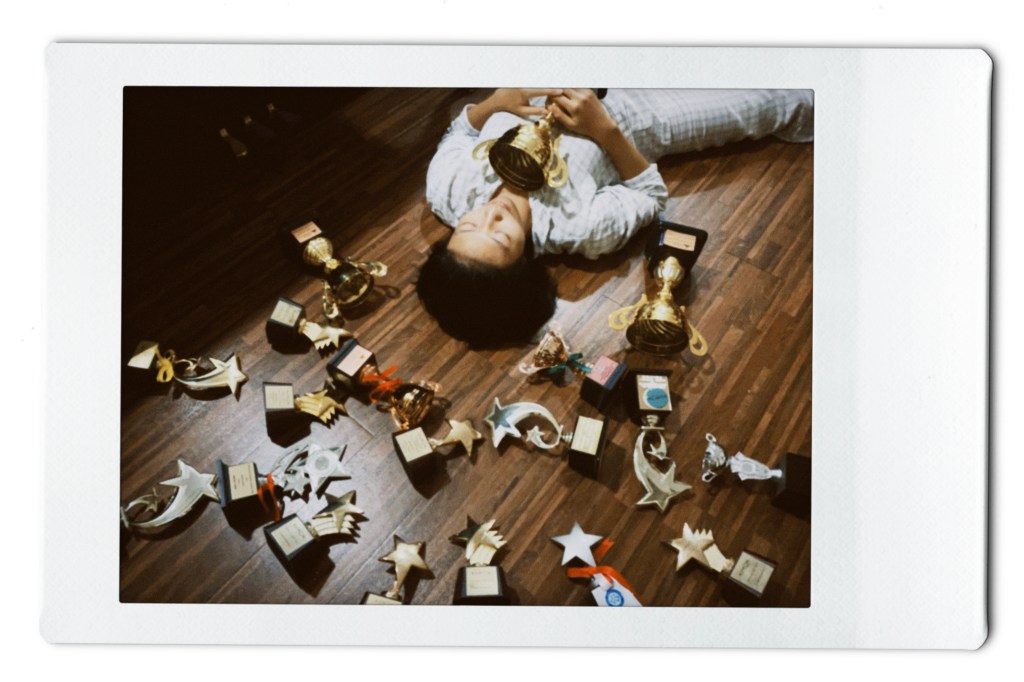
I suppose this quote captures a lot about my attitude towards winning things. Sure, it’s wonderful for that memorialised instant of adrenaline and feel good, and the trophies you win do make for great photo props (I feel like I should put out this belated disclaimer that once again almost all of the trophies depicted are my brother’s so there is nothing to flex here). However, I have a rather muted response to all good news, partly because ambition is fading with age, partly because I’m already worrying about the pressure of winning future games when today’s wins cannot guarantee tomorrow’s victory. Some people take the lack of celebration as humility but it’s not. Perhaps the desire to still win things isn’t completely eradicated, but here I have struggled to set down the nuances to that ambition. I hope it will make sense to future me when I look back.

 Updates
Leave a comment